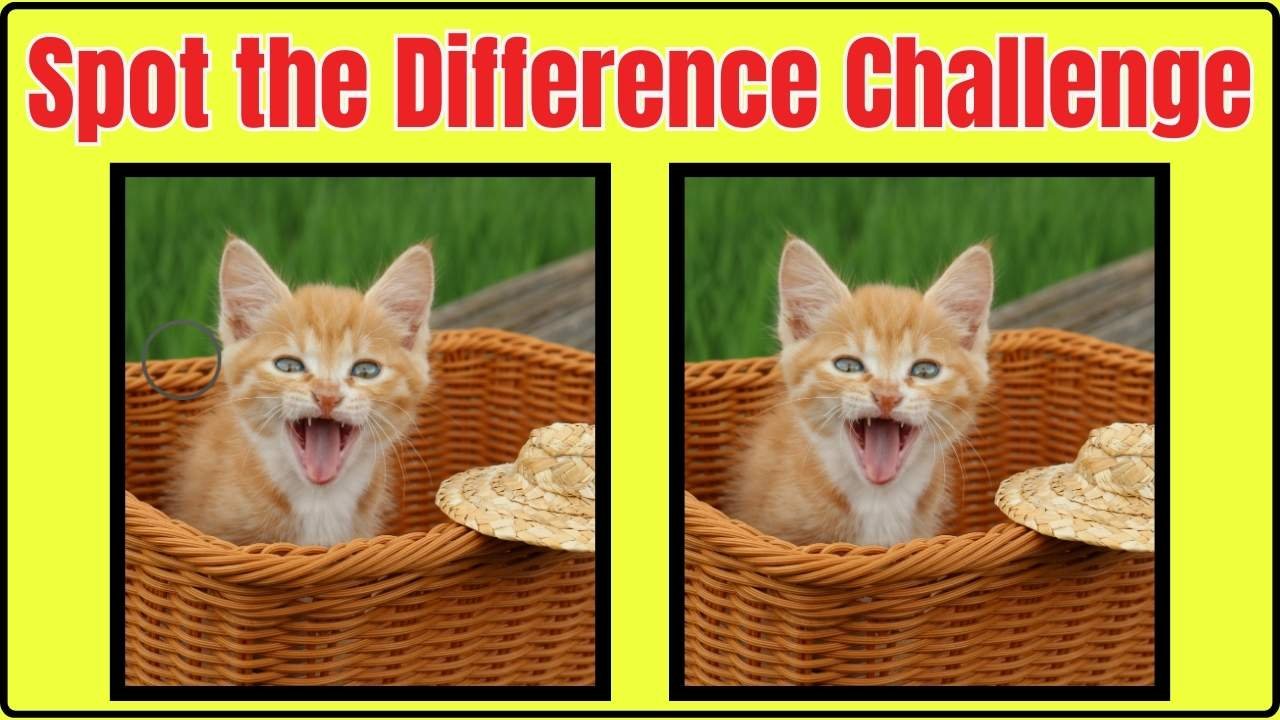

Spot the Difference Challenge: In a world buzzing with constant distractions, the Spot the Difference Challenge: Can You Find 3 Hidden Changes in the Cars Image in 7 Seconds stands out as more than just a game — it’s a mental tune-up, a test of your observation skills, and a way to stay sharp in a fast-moving world. You’ve probably scrolled past this viral image on social media, paused, squinted, and thought, Wait, something’s off here. That’s because your brain loves spotting patterns — and breaking them. This quickfire challenge draws from that instinct and turns it into a 7-second brain sprint. Let’s explore this seemingly simple visual test through the lens of science, culture, education, and a touch of good ol’ American fun.
Table of Contents
Spot the Difference Challenge
The Spot the Difference Challenge: Can You Find 3 Hidden Changes in the Cars Image in 7 Seconds isn’t just a brain teaser — it’s a tool for better living. It teaches patience, improves focus, sharpens memory, and challenges you to slow down in a fast world. Whether you’re a kid learning to look closely or an adult regaining lost attention skills, these puzzles offer simple joy with serious benefits. Just like our ancestors who scanned the land for signs of rain or danger, you’re training your brain to see beyond the surface — and that’s a gift in any walk of life.

| Topic | Details / Stats |
|---|---|
| Challenge | Find 3 hidden changes in a Cars image in under 7 seconds |
| Avg. Human Attention Span | 8 seconds (↓ from 12 seconds in 2000) |
| Brain Skills Trained | Visual memory, pattern recognition, attention to detail |
| Cognitive Boost | 10–20 minutes of visual puzzles daily improves processing speed |
| Target Age | 8+ (ideal for kids, adults, seniors) |
| Full Puzzle Access | Noukhez School System |
What’s the Big Deal with Spot the Difference Challenge?
At first glance, the challenge seems simple: two pictures, three differences, and a 7-second timer.
But the truth? Most people fail to find all three changes in under 7 seconds. Why?
Because it’s not about just looking — it’s about seeing. That means training your brain to scan, compare, and process visual information quickly. It’s like playing shortstop in a baseball game — you’ve got to see the ball, read the field, and act — all within seconds.
And when the pictures are characters from the beloved Cars franchise? Well, that just makes it more engaging — especially for younger audiences who love animated stories and familiar faces.
Why These Games Matter for Everyone?
This is not just child’s play. Spot the difference puzzles are now used in:
- Corporate training for QA testers
- Therapeutic exercises for seniors with early-stage memory loss
- Classrooms to help kids boost concentration and calm down
- Military and aviation training to improve focus under pressure
It’s a game on the surface, but underneath, it’s sharpening skills that every professional — from a designer to a data analyst — relies on.
The Psychology Behind It
According to Frontiers in Psychology, visual puzzles enhance two core parts of cognitive function: selective attention and working memory.
Selective attention helps you focus on one detail in a noisy environment. Ever notice how you can hear your name across a crowded room? That’s selective attention at work.
Working memory, on the other hand, is the kind of mental sticky note you use when doing mental math, reading instructions, or — in this case — comparing two images in real-time.
These skills degrade if not used — like muscles that go weak. That’s where daily puzzles help.

What Are the 3 Hidden Differences in the Cars Image?
Spoiler Alert: If you haven’t tried the challenge yet, head over to Noukhez School System first.
Now, here’s what most folks missed:
- Mouth Expression – The yellow car has a subtle smile in one image, and a straight face in the other.
- Missing Windshield Wiper – In one image, it’s mysteriously absent.
- Tire Tread Detail – The blue car’s front tire has a different pattern.
These changes aren’t obvious — they’re designed to push your brain to scan quickly and spot irregularities in symmetry, color, and shape.
Step-by-Step Guide to Mastering Spot the Difference Challenge
You want to level up your game? Let’s walk through a pro-level approach:
1. Start With a Full Scan
Give yourself 1–2 seconds to glance over the image as a whole. Don’t get stuck in one area too early.
2. Divide the Image into Quadrants
Mentally slice the image into four: top left, top right, bottom left, bottom right. Check one quadrant at a time.
3. Compare Key Visual Anchors
Look at faces, edges, tires, eyes, colors — these are hotspots for small changes.
4. Use Visual Memory Triggers
Recall what you just saw and compare it. Even slight shifts will feel “off” to your brain.
5. Practice Timed Sessions
Use your phone’s timer. Start with 15 seconds, then work down to 7. Repetition builds speed and pattern memory.
The Cultural Angle: Why Seeing Matters in Native Wisdom
In Native American traditions, observation is more than a skill — it’s a survival tool and spiritual practice. Our elders often said, “The hawk sees what the rabbit does not.” That wasn’t just a phrase — it was a reminder that awareness of small details can reveal bigger truths.
When children were taught to track animals or watch cloud patterns, it wasn’t about games. It was about learning to notice what others miss — and that same philosophy is echoed in these visual puzzles.
By engaging in these games today, we’re honoring a deeper cultural practice: learning to truly see.
How This Helps Different Age Groups?
| Age Group | Benefit |
|---|---|
| Kids (8–12) | Improves visual literacy and patience |
| Teens (13–18) | Enhances memory and cognitive agility |
| Adults (19–50) | Trains focus, helps multitasking |
| Seniors (50+) | Slows memory decline, promotes mental fitness |
For students, this puzzle is a break from screen fatigue. For seniors, it can help delay cognitive decline. For professionals, it sharpens workplace-critical skills like proofreading, inspection, and spotting errors.
Tips for Kids With ADHD or Special Needs
Spot the Difference games are often recommended by therapists for children with ADHD — when used intentionally.
Tips:
- Use bigger images with clear contrast.
- Increase the timer to 20–30 seconds.
- Remove background distractions.
- Reward effort, not just accuracy.
These tweaks ensure the puzzle remains empowering, not frustrating.
Level Up: Other Games That Train the Brain
Why stop at Cars puzzles?
Try these:
- Sudoku – Trains logic and number memory.
- Memory Card Games – Boosts retention and recognition.
- Word Search / Crosswords – Improves language processing.
- Hidden Object Games – Similar visual skills but in complex environments.
Even games like Wordle and Tetris tap into different parts of your brain and complement the skills honed in “spot the difference” games.