

As the year comes to a close, many people begin to prepare for the annual shift of Daylight Saving Time (DST). In 2026, the clocks will fall back on Sunday, November 1, marking the return to standard time and offering an extra hour of sleep.

This transition occurs early in the morning at 2:00 a.m. local daylight time, when clocks will shift back one hour to 1:00 a.m. standard time. While this shift brings some welcomed extra sleep, it also prompts questions about its purpose, effects, and timing.
Table of Contents
Daylight Saving Time 2026
| Event | Date |
|---|---|
| Daylight Saving Time Begins | Sunday, March 8, 2026 (Clocks forward) |
| Daylight Saving Time Ends | Sunday, November 1, 2026 (Clocks back) |
| Time Change (Clocks Fall Back) | 2:00 a.m. → 1:00 a.m. local time |
| U.S. States Not Observing DST | Hawaii, most of Arizona, some territories |
| Primary Purpose | Align daylight with waking hours in winter |
For many people in the U.S. and other countries observing DST, the fall back represents the conclusion of the extended daylight hours of summer. This article will guide you through when the time change happens, the reasons for it, and the global impact of this twice-yearly adjustment. Additionally, we will explore the history of DST and why its practice continues to be debated today.
Daylight Saving Time 2026: When Clocks Fall Back
In 2026, Daylight Saving Time ends on Sunday, November 1. At 2:00 a.m. local daylight time, clocks will be set back one hour to 1:00 a.m. standard time. This shift marks the official return to standard time for the United States and several other regions that observe DST. For most individuals, this means an extra hour of sleep on that Sunday morning, but it also marks the end of the longer daylight hours of the summer months.
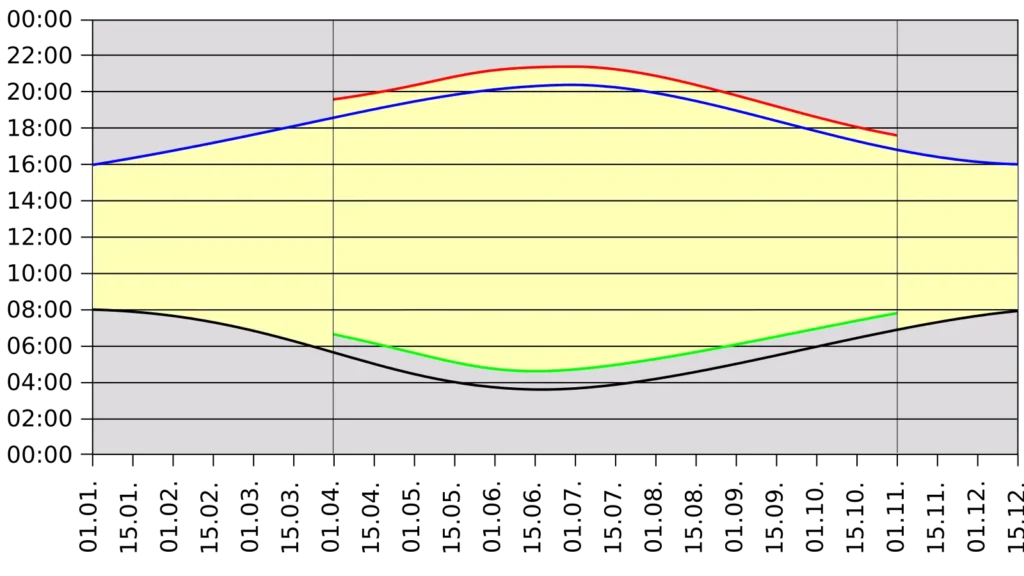
Daylight Saving Time is a practice that adjusts the clock forward in the spring and back in the fall. The “fall back” shift occurs on the first Sunday in November, making it an easy date to remember. After this shift, sunrise and sunset times will shift earlier, marking the transition into the darker months of the year, with shorter daylight hours.
Why Do We Fall Back? The History Behind DST
Daylight Saving Time is a practice that dates back to the early 20th century. The idea was first introduced by Benjamin Franklin in 1784, but it was not widely adopted until the early 1900s. The goal of DST is to make better use of natural daylight during the longer summer months by shifting the clocks forward in spring, which results in more daylight in the evening. As a result, businesses, schools, and the public can benefit from extended daylight hours.
In the U.S., the practice of DST was first implemented during World War I to conserve fuel by reducing the need for artificial lighting. However, after the war, it was abandoned, only to be reintroduced during World War II.
In the decades that followed, the U.S. and many other countries established standardized times for DST, and it became an annual tradition. The Uniform Time Act of 1966 helped solidify this schedule by establishing standardized time zones and daylight saving periods.
However, the effectiveness of DST in achieving its intended goals has been the subject of ongoing debate. Some argue that DST saves energy by reducing the need for artificial lighting, while others question its true impact. The modern energy-saving benefits are debated, with some studies suggesting minimal savings in a world where electric lighting is just one small part of energy consumption.
Impacts of Daylight Saving Time on Health and Productivity
While Daylight Saving Time has the benefit of aligning daylight with waking hours, its twice-yearly shifts have been linked to several health effects:
- Sleep Disruption: The transition between DST and standard time can disrupt sleep patterns. Many people experience temporary sleep deprivation after the clocks are changed, which can affect concentration, mood, and productivity.
- Increased Risk of Heart Attack and Stroke: Some research has shown that the transition to standard time may increase the risk of heart attacks, particularly in the days immediately following the time change.
- Accidents and Injury: The change can lead to an increase in accidents due to tiredness and impaired alertness, as people struggle to adjust to the new sleep schedule. The first few days after the time change often see an uptick in workplace injuries and traffic accidents.
Health experts recommend adjusting your sleep schedule gradually before the time change and maintaining consistent sleep habits to mitigate these effects.
Global Perspective on Daylight Saving Time
Although many countries observe Daylight Saving Time, its implementation varies by region. The United States, much of Europe, and parts of Canada observe DST. However, many other countries and regions near the equator, where the difference between day and night is minimal year-round, do not observe the time change.
Notably, some countries have abolished DST altogether, citing the negative impact on health and the minimal energy savings. Japan, China, and most African nations do not participate in DST. India and Australia have also chosen to remain on standard time year-round.
Within the European Union, there have been significant discussions about whether to abolish DST. The European Parliament voted to end seasonal time changes in 2018, and many countries are now considering whether to remain on permanent standard time or permanent daylight saving time.
The Debate: To Abolish or Not to Abolish DST?
As more regions question the continued use of Daylight Saving Time, many U.S. states have proposed abolishing the time change altogether. Florida, for example, has passed laws advocating for year-round daylight saving time, but this change would require federal approval.
Some states, such as California and Washington, have also considered staying on standard time year-round. The Sunshine Protection Act aims to eliminate time changes in the U.S. by making DST permanent.
The debate is ongoing, with proponents arguing that permanent daylight saving time would provide longer evening daylight, encouraging economic growth and outdoor activities. Meanwhile, critics argue that the shift causes unnecessary disruption and potentially serious health effects, advocating for the return to permanent standard time.
Related Links
As we approach the end of Daylight Saving Time 2026, it’s essential to be aware of when the clocks fall back on November 1. This shift marks the end of the longer daylight hours and the start of shorter days and longer nights.
Whether you view it as a welcomed extra hour of sleep or as an annual disruption, the change is part of a broader global conversation about the relevance of DST in modern society. As we look toward the future, it remains unclear whether permanent time changes will become the norm, but for now, November 1, 2026 will mark the return to standard time for much of the U.S. and beyond.
FAQs
Q: Why do we observe Daylight Saving Time?
A: Daylight Saving Time is designed to make better use of available daylight during the warmer months by shifting the clocks forward, which helps extend daylight hours into the evening.
Q: What happens when the clocks fall back?
A: On November 1, 2026, the clocks will be set back by one hour at 2:00 a.m. local daylight time, returning to 1:00 a.m. standard time.
Q: Is Daylight Saving Time observed in all states?
A: No, Hawaii and most of Arizona do not observe DST. Other U.S. territories like Puerto Rico and Guam also do not participate.
Q: Will Daylight Saving Time be abolished in the future?
A: There is ongoing debate, with several states proposing legislation to eliminate DST. The Sunshine Protection Act aims to make DST permanent in the U.S.