

Gas prices in 2025 in USA state-by-state tell a story of two Americas: one where drivers pay in the mid‑2‑dollar range for regular fuel, and another where people are stuck paying well above 4 dollars a gallon. The national average sits somewhere in between, but “average” doesn’t mean much when you are standing at a pump in California or Mississippi. If your state is on the expensive side, your yearly fuel bill can easily climb by hundreds of dollars compared with someone living in a cheaper state.

One of the reasons gas prices in 2025 in USA state-by-state feel so uneven is that states have very different approaches to fuel taxes and environmental rules. High‑tax states that add extra fees or require special cleaner blends of gasoline almost always land on the “most expensive” lists. States with lighter tax burdens, strong refining capacity or easier access to supply tend to stay at the cheaper end, giving their residents a quiet but meaningful cost‑of‑living advantage. For anyone planning a move, a long‑term commute or a road‑heavy lifestyle, these differences are worth taking seriously.
Table of Contents
Gas Prices in 2025 In USA State-by-State
| State | Average Regular Gas Price 2025 (USD/gal) | Relative Level | Main Factors Driving Price |
|---|---|---|---|
| California | 4.80 | Very high | High taxes, strict fuel standards, distance |
| Hawaii | 4.50 | Very high | Shipping costs, remote islands, limited refineries |
| Washington | 4.40 | Very high | Taxes, environmental policies |
| Oregon | 4.00 | High | West Coast supply and regulations |
| Nevada | 3.90 | High | Tourism, distance from refineries |
| Illinois | 3.40 | Above average | State and local fuel taxes |
| Pennsylvania | 3.30 | Above average | High fuel taxes |
| New York | 3.10 | Above average | Urban demand, taxes |
| Florida | 3.00 | Around national average | High driving demand, moderate taxes |
| Ohio | 3.00 | Around national average | Regional competition |
| Texas | 2.75 | Low | Refineries, relatively low taxes |
| Alabama | 2.70 | Low | Lower taxes, regional supply |
| Tennessee | 2.70 | Low | Competitive pricing in Southeast |
| Louisiana | 2.70 | Low | Gulf Coast refining hub |
| Mississippi | 2.65 | Very low | Low taxes, strong supply access |
Is Your State Among The Most Expensive
If you are wondering whether your state is among the most expensive, start by looking at three simple clues: fuel taxes, distance from major refining hubs and environmental regulations. States that pile on high fuel taxes, add special environmental fees or require unique cleaner blends of gasoline almost always end up on the “most expensive gas” charts. California is the classic example, but West Coast and Northeastern states often follow close behind, with prices well above the national average.
On the flip side, states that are close to refineries, pipelines and ports and that keep fuel taxes relatively modest usually land near the bottom of the price rankings. Many southern and Gulf Coast states fall into this category. Over a full year of commuting, the difference between paying around 2.70 dollars and paying 4.70 dollars a gallon can easily cross four figures for a family with multiple vehicles. That is why understanding this state-by-state landscape is not just interesting, but financially important.
How 2025 Gas Prices Compare with Recent Years
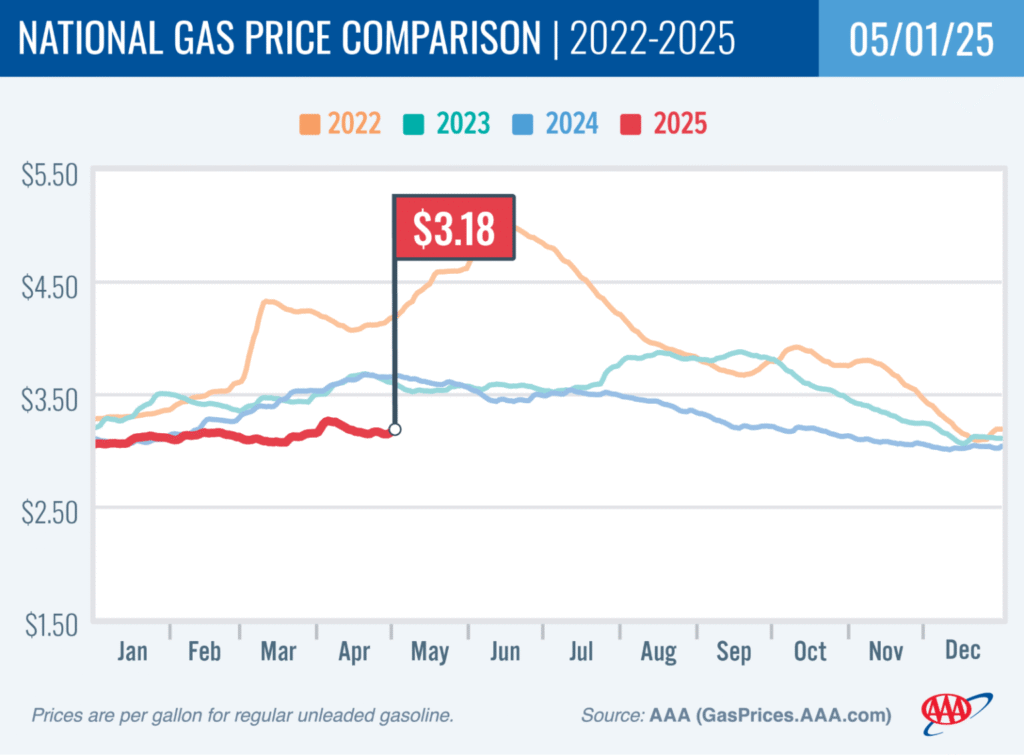
- To put 2025 in context, it helps to remember how rough the last few years have been at the pump. After the sharp spike that followed the pandemic and global supply disruptions, national averages pushed beyond 4 dollars a gallon in many periods, catching a lot of households off guard. In comparison, 2025 looks calmer, with overall prices easing downward and fewer extreme peaks, even though they remain higher than in the pre‑pandemic era.
- However, that doesn’t mean volatility is gone. Prices still jump around holiday seasons, during refinery maintenance, or when global crude markets react to geopolitical news. In some states, a temporary disruption at a major refinery or pipeline can trigger a short‑term spike that doesn’t show up clearly in the national average. This is why paying attention to local patterns, not just national headlines, can give you a more realistic picture of what to expect at the pump.
Why Gas Prices Vary So Much By State
The biggest driver of state-level differences is tax policy. Some states rely heavily on fuel taxes to fund highways, public transit, or climate-related projects. Others keep those taxes lean to support drivers and businesses. When you combine state taxes with federal taxes and sometimes local charges, you end up with a wide range of add‑ons per gallon. That alone can make a difference of dozens of cents before you even account for the raw fuel price.
Regulations come next. Certain states require specific low‑emission or seasonal blends that cost more to produce and distribute. These “boutique” fuels tend to be used in densely populated or environmentally sensitive areas, which are often the same places where demand is highest. Add in the cost of transporting fuel across long distances or through limited infrastructure, and prices in those states naturally climb higher than in regions sitting right on top of major refining and pipeline networks.
What 2025 Gas Prices Mean For Your Budget
For someone driving 12,000 to 15,000 miles a year, gas prices are no small detail. A difference of 1 to 2 dollars per gallon between two states can easily mean hundreds or even over a thousand extra dollars spent in a year. If your state consistently appears among the most expensive, you are effectively paying a “location premium” every time you fill up. That makes smart fuel habits more important than ever.
There are a few practical ways to soften the blow. Choosing a more fuel‑efficient vehicle or planning trips to avoid unnecessary miles is an obvious one, but smaller tweaks add up too. Keeping tires properly inflated, avoiding aggressive acceleration, reducing idling and combining errands into one round trip all help squeeze more miles out of every gallon. Loyalty programs and fuel‑focused credit cards can knock a few cents off per gallon, and over a full year that can be the difference between feeling crushed by gas prices and just mildly annoyed.
Gas Prices in 2025 In USA State-by-State: Is Your State Among the Most Expensive?
How To Check If Your State Is Getting Cheaper Or Costlier
- Even in a single year, your state’s position can shift around. A place that was mid‑range in early 2025 might drift toward the expensive side by year‑end if taxes change, local refineries shut down or new regulations kick in. Conversely, a state could see relative improvement if new supply routes open or demand softens. The best way to stay informed is to follow updated gas price maps and state‑level averages rather than relying on old assumptions.
- Many drivers now build a quick price check into their routine the same way they check the weather. Before a long trip, comparing prices along your route can reveal where it makes sense to fill up and where you should just top off enough to get to a cheaper state. Over long distances, this kind of planning can make a noticeable difference, especially when traveling through stretches with both very high and very low price states back‑to‑back.
FAQs on Gas Prices in 2025 In USA State-by-State
1. Why do some states always seem to have the highest gas prices?
Some states regularly top the charts because they combine high fuel taxes, strict environmental regulations and higher distribution costs.
2. Why are gas prices lower in many southern and Gulf Coast states?
These states often sit close to major refineries and pipelines and tend to have relatively low state fuel taxes. Shorter supply chains and lighter tax burdens translate into lower prices at the pump for drivers.
3. Can gas prices in my state change quickly within a year?
Yes. Seasonal demand, refinery outages, storms, tax changes or global events can all move prices noticeably within weeks or months.
4. How can I reduce the impact of high gas prices on my monthly budget?
You can drive fewer unnecessary miles, maintain your car well, choose fuel‑efficient routes, and take advantage of loyalty programs or cards that offer fuel discounts or cash‑back.