

In a groundbreaking discovery that has shocked NASA and astronomers worldwide, 3I/ATLAS, an interstellar comet, is offering an unprecedented view of material from beyond our solar system. Detected in July 2025 by the Asteroid Terrestrial-impact Last Alert System (ATLAS).
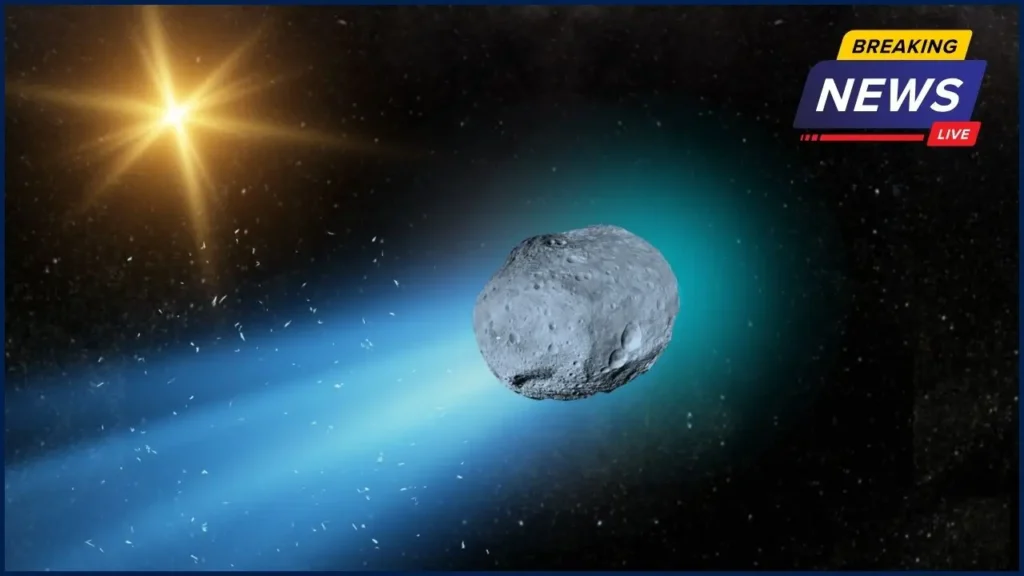
This comet’s unexpected behavior and chemical composition have left scientists astounded, prompting further exploration into its origins and potential implications for planetary science and astrobiology.
Table of Contents
3I/ATLAS Cosmic Visitor Discovery
| Feature | Details |
|---|---|
| Designation | 3I/ATLAS |
| Discovered | July 1, 2025 |
| Origin | Interstellar (outside the Solar System) |
| Trajectory | Hyperbolic (passing through the solar system) |
| Closest Approach to the Sun | October 29, 2025 |
| Speed | 150,000 mph (241,400 km/h) |
| Significance | Third confirmed interstellar object |
| Expected Departure from the Solar System | Early 2026 |
3I/ATLAS is only the third confirmed interstellar object to be observed as it travels through our solar system. Its passage through the solar system has been a once-in-a-lifetime event for astronomers, offering vital clues about the composition of interstellar space and the potential for life-building chemicals to exist in distant star systems.
The comet’s unexpected trajectory, unusual chemical signatures, and unprecedented activity have led to significant excitement in the astronomical community, as it holds the potential to reshape our understanding of how stars and planets form.
3I/ATLAS: A Unique Interstellar Visitor
The discovery of 3I/ATLAS represents an extraordinary event for astronomy. Interstellar objects, like comets and asteroids that originate outside of our solar system, are rare. Before 3I/ATLAS, only two interstellar objects had been confirmed: ʻOumuamua, discovered in 2017, and 2I/Borisov, discovered in 2019.
These objects sparked excitement because they were the first direct samples from beyond our solar system, offering a unique opportunity to study the characteristics of material from other star systems.
3I/ATLAS, which was first spotted by the ATLAS telescope in Chile, stands out because of its hyperbolic trajectory, which indicates that it is passing through the solar system on a one-time journey. Unlike typical comets, which orbit the Sun and remain bound to our star, 3I/ATLAS is not gravitationally tied to the Sun. After its close approach, it will continue its journey out of the solar system, never to return.
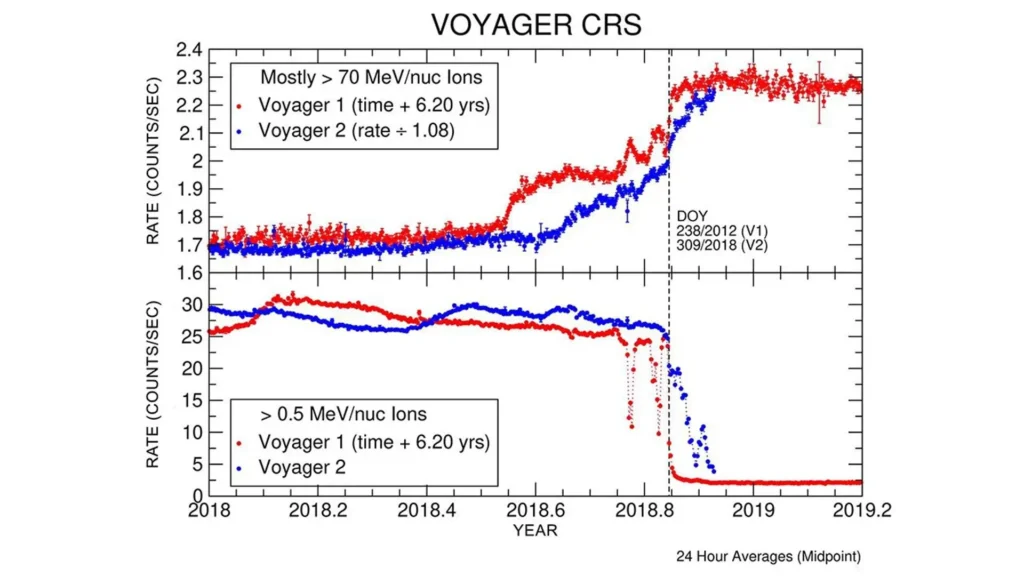
Astronomers have tracked the comet as it made its closest approach to the Sun on October 29, 2025, and it is currently moving away from the inner solar system. During this close approach, 3I/ATLAS reached a speed of over 150,000 miles per hour (about 240,000 kilometers per hour), making it one of the fastest objects ever observed within the solar system.
This rapid movement, combined with its unfamiliar origin, has sparked widespread interest in its composition and the nature of the materials it carries.
Unexpected Chemical Activity and Insights
One of the most surprising aspects of 3I/ATLAS is the chemical activity it has shown as it approaches the Sun. Most comets exhibit typical behavior: a faint halo (coma) and a bright tail caused by the sublimation of water ice as the comet nears the Sun. However, 3I/ATLAS has shown signs of unusual chemical behavior, including diatomic carbon (C₂) emissions that give it a distinctive greenish glow.
This unexpected green glow has intrigued scientists because it is not typically observed in comets originating from the solar system. The presence of diatomic carbon, a molecule rarely seen in solar system comets, suggests that 3I/ATLAS may contain materials that formed under very different conditions from those present in our solar system.
Additionally, 3I/ATLAS has been found to contain a mixture of organic compounds, including methanol and hydrogen cyanide, which are thought to be precursors to life. These findings support the possibility that life-building molecules could be common across the galaxy and may be shared between star systems.
This discovery has far-reaching implications for the study of astrobiology and the potential for life elsewhere in the universe.
Advanced Observations and Space Telescopes
The study of 3I/ATLAS has prompted international collaboration using a variety of cutting-edge instruments. These include:
- Hubble Space Telescope: Hubble has captured detailed images of the comet’s coma and tail, revealing the complex structure of dust and gas emissions that characterize the comet’s outgassing. These images have given scientists new insights into how comets behave as they interact with the Sun’s radiation.
- James Webb Space Telescope (JWST): Using infrared observations, JWST has provided crucial data on the comet’s chemical composition, particularly its icy and gaseous components. JWST’s ability to detect specific wavelengths of light has been instrumental in identifying the comet’s unique molecular makeup.
- Ground-based Telescopes: Worldwide observatories have been monitoring the comet’s trajectory and brightness changes. These observations are essential for tracking its movement and assessing how its activity evolves as it moves away from the Sun.
The data from these missions has given researchers a more comprehensive view of 3I/ATLAS, allowing them to make more accurate predictions about its future trajectory and continue investigating the materials it carries.
The Role of Citizen Science in the Study of 3I/ATLAS
The study of 3I/ATLAS has not been limited to professional astronomers and space agencies. Citizen scientists have played an important role in tracking and documenting the comet. With the increasing availability of high-quality telescopes and observatories around the world, amateur astronomers have been able to contribute valuable data on the comet’s trajectory, brightness, and composition.
This collaborative effort highlights the growing importance of citizen science in modern astronomy. Amateur astronomers have used online platforms and forums to share their observations, providing real-time updates and helping to refine scientific understanding of the comet’s behavior.
This is a prime example of how the internet and modern technology are enabling non-professional astronomers to participate in significant scientific discoveries.
What’s Next for 3I/ATLAS? Future Observations and Studies
As 3I/ATLAS continues its journey out of the solar system, astronomers will continue to monitor its path and behavior. While the comet’s closest approach to Earth is already behind us, the data gathered will provide insights into the nature of interstellar objects and the conditions present in other star systems.
The scientific community is already preparing for future interstellar object discoveries. The increasing number of observatories and the development of more advanced instruments will likely lead to further findings about interstellar material.
3I/ATLAS could mark the beginning of a new era in interstellar exploration, paving the way for future missions that may one day travel to objects from other star systems.
Related Links
Daylight Saving Time 2026 – Here’s When Your Clocks Fall Back This Year
The discovery of 3I/ATLAS has provided an unparalleled opportunity to study the composition and behavior of an interstellar object. With its unusual chemical activity and surprising characteristics, the comet has already contributed to important breakthroughs in astrobiology and planetary science.
As astronomers continue to analyze the data from this cosmic visitor, it is clear that 3I/ATLAS will leave an enduring legacy in our understanding of the universe beyond the solar system.
With its remarkable features and ongoing observations, 3I/ATLAS is not just a comet; it is a time capsule from another star system, offering clues about the origins of life and the interstellar medium. The collaboration between space agencies, astronomers, and citizen scientists ensures that this cosmic visitor will continue to captivate and inform researchers for years to come.