
A $2,970 direct deposit has caught the attention of many Americans, particularly those hoping for a new round of federal relief payments. Some online reports suggest that this amount could be on its way in 2025, possibly as part of a stimulus check or economic rebate. However, claims of a universal $2,970 direct deposit are largely speculative and not backed by any official government source.
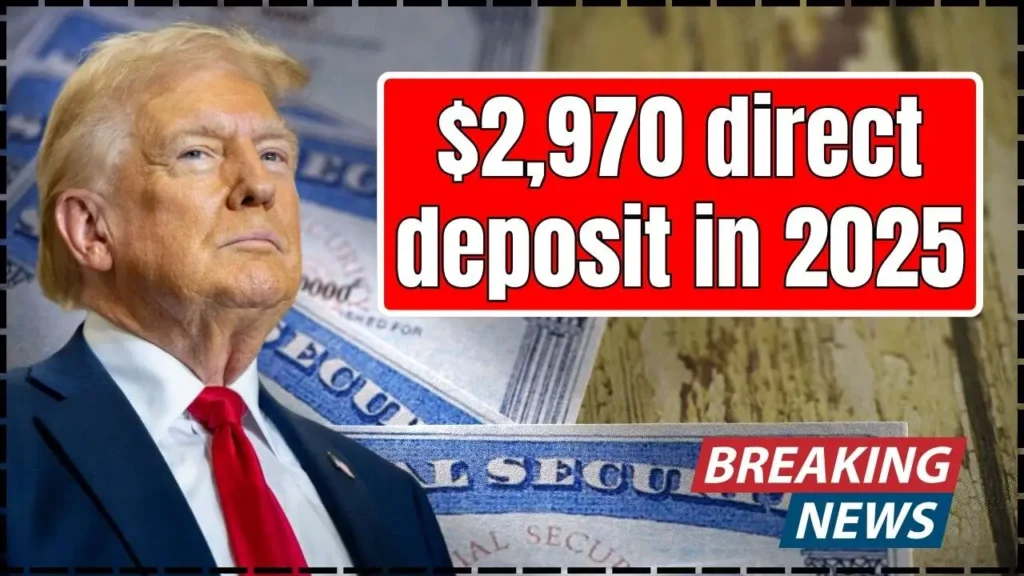
While there is no concrete plan for such a payment at this time, there are ongoing discussions about economic support, including tax credits, refunds, and state-level relief programs. This article aims to separate fact from fiction by addressing the rumors, realities, and potential future scenarios surrounding the $2,970 direct deposit claim.
Table of Contents
What’s Actually Happening: Understanding the Rumors
The $2,970 Direct Deposit Claim
The idea of a $2,970 direct deposit stems from a mix of speculation, confusion, and misinterpretation of past government relief efforts. Various online platforms have picked up on numbers like $2,970, often mixing discussions of past stimulus checks with new legislative proposals. However, this figure is not based on any confirmed federal plan. Here’s why:
- Stimulus checks in the past ranged from $600 to $1,400 per person, depending on the Economic Impact Payment (EIP).
- Current relief packages, if passed, could include targeted assistance, tax refunds, or state-specific rebates.
- The $2,970 is simply an inflated number—likely a result of confusion between various relief proposals.
The Truth: What We Know for Sure
While the $2,970 direct deposit claim remains unsubstantiated, here’s what we do know:
1. No Confirmed Federal Payment of $2,970
At present, there is no confirmed federal plan to send a $2,970 direct deposit to American taxpayers. This figure seems to have been misinterpreted from various economic relief proposals, but it is not a reality. Claims of large universal payments circulating on social media are typically misleading or false.
2. Tax Refunds and Credits Remain Key
The IRS continues to issue tax refunds and refundable credits for eligible taxpayers. For many, these refunds may be larger than usual based on changes in tax laws, eligibility for the Earned Income Tax Credit (EITC), or Child Tax Credit adjustments. These payments are processed annually, but they are based on individual filings, not a universal direct deposit.
3. Ongoing Relief Proposals
The U.S. government is continuously debating new economic relief proposals, many of which focus on lower-income households or specific vulnerable groups. However, these proposals are not guarantees. Legislative debates are ongoing, and nothing has been finalized for 2025 direct relief payments.
The Speculative Nature of $2,970 Claims
The number $2,970 likely arises from the intersection of several political and fiscal proposals that might affect future relief payments:
- Possible State-Level Rebates: Some states with budget surpluses have proposed direct relief or rebate checks for their residents. These amounts can vary from $1,000 to $2,000, but the $2,970 figure appears to be exaggerated for dramatic effect.
- Extended Refunds from Tax Credits: In some instances, families with children or low-to-middle-income earners could see larger-than-usual tax refunds, but these are not direct stimulus checks. The $2,970 figure does not correlate with any actual federal tax credit plans for 2025.
- Misinterpretation of Past Stimulus Efforts: Many people who were eligible for COVID relief payments in the past assume that similar payments are coming again. However, the last round of stimulus checks occurred in 2021, and no new legislation has been passed to extend those payments.
Other Possible Relief Measures in 2025
While no $2,970 payment is currently in the works, here are some potential relief measures for 2025:
1. Social Security Payments
Millions of Americans rely on Social Security benefits, and in 2025, the Cost of Living Adjustment (COLA) will likely result in modest increases in monthly payments. These increases are generally tied to inflation and do not involve any one-time payments.
2. State-Level Programs
Certain states, such as California and Colorado, have initiated direct rebates or relief payments in the past year. These programs target specific income levels and may offer one-time payments of $500–$1,500, though none are federally mandated.
3. Expanding Child Tax Credit
There is potential for expanded child tax credits for families with children under 18, though specific amounts are still subject to approval and depend on legislative outcomes. These payments are typically offered through the IRS.
The Risks of Misinformation
Given the widespread nature of $2,970 direct deposit rumors, it’s crucial to address misinformation and scams surrounding economic relief payments:
Scams Targeting Vulnerable Individuals
Scammers often exploit uncertainty and confusion about relief payments by sending fraudulent messages asking for personal information or payment processing fees. Do not share personal details in response to unsolicited messages claiming that you are eligible for direct deposits.
$2,970 direct deposit in 2025 Stay Safe
- Always verify the information through official sources, such as the IRS website or Social Security Administration (SSA).
- Avoid responding to messages that ask for your bank account information, Social Security number, or other sensitive data.
- Rely on news from trusted outlets like AP, Reuters, and BBC for the most accurate and up-to-date information.
Expert Analysis on Economic Relief Programs
Economist Insights
Experts agree that while direct stimulus checks in the magnitude of $2,970 may not be in the works, the economy could still see targeted relief measures. Dr. Anya Sharma, an economist at the Brookings Institution, stated:
“Stimulus packages or direct payments of any sort must be carefully structured to support low- and moderate-income households. While large-scale relief checks are not a priority right now, adjustments to tax credits and state-based relief programs could continue.”
Dr. Sharma highlights that wider relief programs could be more focused on specific groups rather than broad, sweeping payments.
What You Can Expect in 2025
For 2025, expect regular government payments like Social Security or tax refunds, not a $2,970 one-time deposit. While there may be some targeted relief programs, including those at the state level, no guarantee exists that every American will see a direct deposit of this size.
It’s important to track reliable sources for updates, including:
- The IRS website for tax-related news.
- The Social Security Administration for updates on benefit adjustments.
- State government websites for region-specific relief plans.
Related Links
Will a Master’s Get Me an R&D Job, or Do I Need a PhD?
When Should I Start Applying for Jobs? A Timeline for Master’s Students
Fact vs. Rumor
The $2,970 direct deposit in 2025 is not a confirmed federal payment, and much of the chatter around it is rooted in rumors and misconceptions. While there may be state-level rebates or changes to tax refunds in the coming year, nothing is set in stone at the federal level.
Always verify information from trusted sources, and be cautious of scam claims and misleading posts. If a new relief package or payment plan is approved in 2025, official announcements will follow through established channels.
FAQs
Is the $2,970 direct deposit real?
No. There is no confirmed $2,970 direct deposit planned for 2025.
Could I receive $2,970 from the government?
It’s unlikely as a universal payment, but targeted relief or tax refunds may result in significant amounts for specific individuals.
Are there any federal relief plans for 2025?
While no direct deposit of $2,970 has been confirmed, there are ongoing discussions about targeted tax credits and state-level relief programs.